
Marion County Arrest to Court Records
A Marion County jail arrest usually starts as a custody event at Multi County Correctional Center. The formal court record develops after the arresting agency submits paperwork, the prosecutor reviews the matter when required, and the proper court opens or updates a case. Marion Municipal Court handles many misdemeanor, traffic, and preliminary matters. Marion County Common Pleas Court handles felony-level cases once they are filed, bound over, indicted, or otherwise moved into that court.
The MCCC roster and the court docket can use different words. The roster may show a hold reason or held-for agency. The court docket may show a complaint, information, indictment, amended count, dismissal, conviction, sentence, warrant, bond entry, or sealed case notation. Treat the roster as custody context and the court record as the case file.
Marion Municipal Court CaseLook is the official municipal record-search route after its disclaimer is accepted.
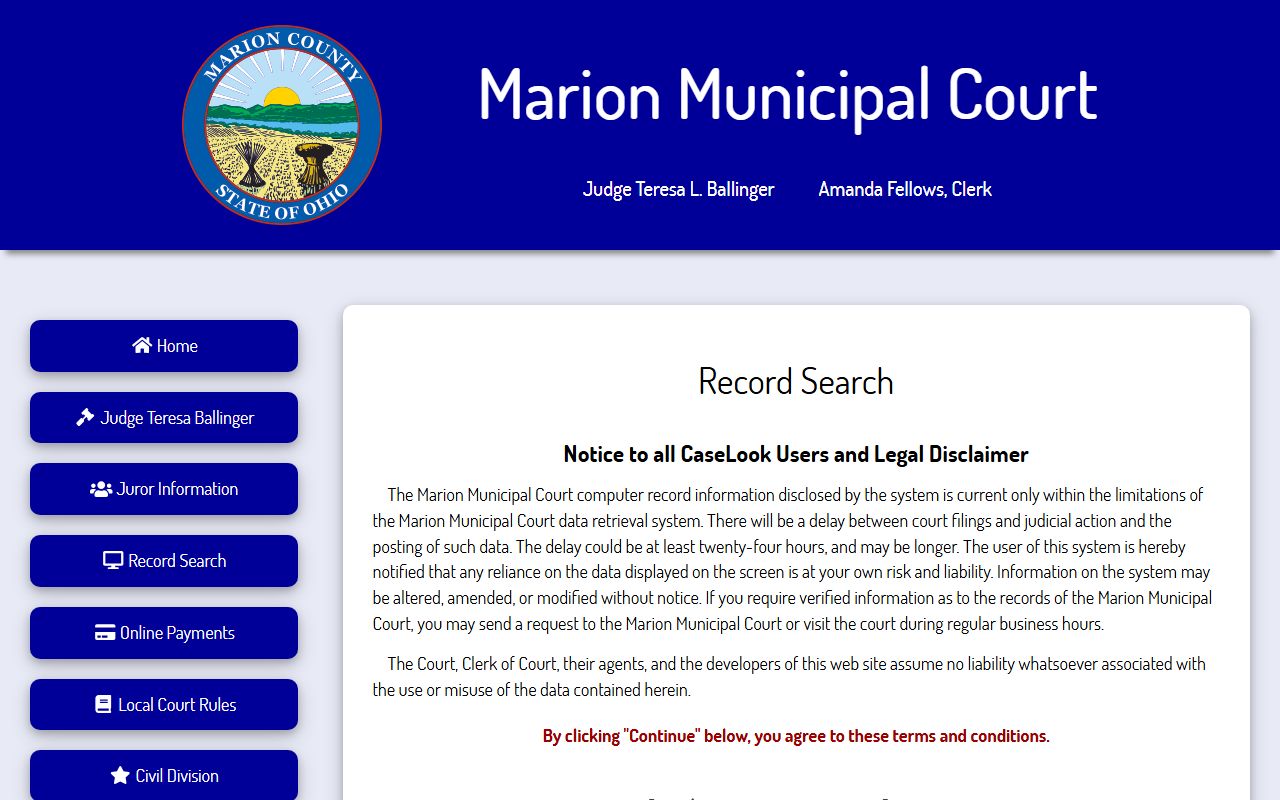
The municipal court disclaimer matters because online court data can lag behind filings and judicial action.
Search Marion County Court Records
Start by identifying the court. The MCCC court information page lists Marion Municipal Court, Common Pleas Court #1, Common Pleas Court #2, the Marion County Clerk of Courts, and probation contacts. Municipal Court CaseLook is the route for municipal matters. The Marion County Clerk of Courts links to CourtView/eServices for Common Pleas and related case records. The Clerk Legal Division is at the Marion County Courthouse and is the records custodian for Common Pleas records and Third District Court of Appeals records.
- Confirm the person's local custody record through the MCCC roster or by calling the jail.
- Use Marion Municipal Court CaseLook for misdemeanor, traffic, and preliminary case activity.
- Use the Clerk's CourtView/eServices portal for Common Pleas felony records.
- If no case appears right away, account for the municipal court warning that posting can lag at least 24 hours and may take longer.
- For verified records, request them from the issuing court or the Marion County Clerk.
The Marion County CourtView/eServices portal is the Clerk-linked route for Common Pleas records.
CourtView should be used for the court case, while the MCCC roster remains the local jail custody source.
Marion County Case Search Fields
The research captured the court access channels more reliably than a full browser-form field inventory. Marion Municipal Court requires the user to accept a disclaimer before searching, and the disclaimer states that online data may lag. CourtView/eServices is a JavaScript/Wicket application that needs a normal browser session. When portal search fields are not visible in static text, use the court's browser search and then contact the clerk for verified copies.
| Portal or Channel | Field / Action | Required | Notes |
|---|---|---|---|
| Marion Municipal Court CaseLook | Disclaimer continue | Yes | User must accept the court disclaimer before searching. |
| Marion Municipal Court CaseLook | Defendant or case search | Unspecified | Use the browser form after acceptance. |
| Common Pleas CourtView | Browser/session information | Yes | Portal requires normal browser interaction. |
| Clerk public-record request | Phone, mail, email, or in person | No | Clerk policy allows several request channels. |
Charge vs Conviction Records
Court records after a Marion County jail arrest should be read in stages. A booking or complaint can list an accusation. A prosecutor may amend, reduce, dismiss, or proceed with charges. A grand jury may indict or return no bill. A conviction exists only after a guilty plea, verdict, or finding. Sentencing follows conviction or another final disposition. The public docket may show all of these events, while the jail roster may keep a shorter hold reason.
| Record Type | What It Means | Why It Matters |
|---|---|---|
| Arrest charge | Charge or hold tied to booking. | Can differ from the final filed court charge. |
| Pending charge | Case or count still active. | Not a conviction. |
| Dismissed charge | Count ended without conviction. | May still appear unless sealed or restricted. |
| Conviction | Guilt by plea, verdict, or finding. | Can lead to sentencing, jail, prison, probation, or fines. |
Marion County Charging Documents
Criminal cases can start or change through different charging documents. The document type often signals where the case is in the process. A municipal complaint may begin a misdemeanor or preliminary felony matter. An information is a prosecutor-filed document used in some felony proceedings. An indictment is returned by a grand jury and is common in felony prosecution. These are court records, not jail roster fields.
| Document | Plain Meaning | Common Use |
|---|---|---|
| Complaint | A charging document that often starts a criminal case. | Municipal matters and early proceedings. |
| Information | A prosecutor-filed charging document. | Some felony proceedings when allowed. |
| Indictment | A grand-jury charging document. | Felony cases in Common Pleas Court. |
Prosecutor Review After Arrest
The Marion County Prosecutor is the county prosecuting attorney, not a district attorney. The official prosecutor page identifies Ray Grogan as Prosecuting Attorney and says the office receives cases for review from law-enforcement agencies in Marion County. That review is the reason a jail hold reason may not match the final court count. The prosecutor can review facts, file charges, decline charges, amend counts, or present felony matters through the proper court path.
The Marion County Prosecutor page explains the office's role in reviewing cases received from law enforcement.
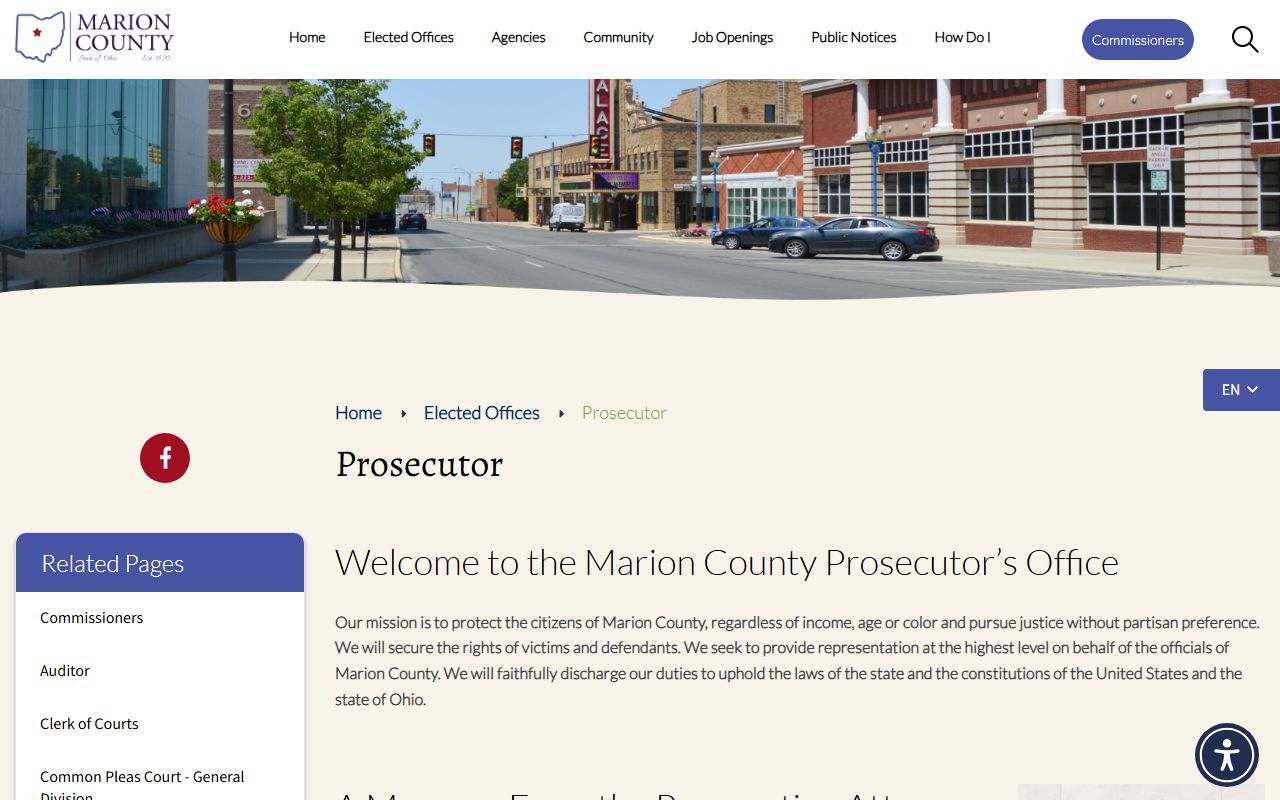
The prosecutor page is useful for understanding why a formal case may change after the initial arrest and booking record.
Bond and Warrant Records
Bond routing in Marion County depends on the court. MCCC says Marion Municipal Court cash and corporate bonds are paid at MCCC, while Marion Common Pleas bonds are posted at Common Pleas Court downtown. Hardin County Municipal Court cash bonds route to the Kenton Police Department. A court docket is the better source for bond entries, bond changes, bench warrants, failures to appear, and recall orders.
The sheriff Zuercher public portal also includes a warrants module. If a person is arrested on a warrant, the jail roster may show a held-for agency or hold reason, while the court docket shows the bench warrant, case, bond, and hearing status. Do not assume that paying bond on one case clears every hold. Another warrant, detainer, parole matter, or no-bond order can keep the person in custody.
| Status | Meaning | Record Source |
|---|---|---|
| Pending | Case or charge remains active. | Court docket. |
| Bound over | Municipal matter moves toward Common Pleas felony handling. | Municipal and Common Pleas records. |
| Indicted | Grand jury returned felony charges. | Common Pleas docket. |
| Bench warrant | Court order for arrest, often from nonappearance. | Court docket and sheriff warrant route. |
| Sentenced | Court imposed penalty. | Court docket and, if prison, ODRC. |
Sealed and Expunged Records
Ohio sealing and expungement law can restrict public access after eligible outcomes. ORC 2953.32 covers eligible conviction and bail-forfeiture records. ORC 2953.33 covers records after a not guilty finding, dismissal, no bill, or pardon. A sealed or expunged record may not appear in the same way through a public portal, and staff may redact or withhold protected information. Juvenile records have their own access limits and should not be treated like adult jail records.
| Term | Plain Meaning | Public Access Effect |
|---|---|---|
| Sealed | Public access is limited by court order. | Portals and offices may restrict the record. |
| Expunged | Record access is restricted under Ohio law. | Public copies may not be available. |
| Redacted | Protected details are removed from a copy. | The public may receive only part of a record. |
Clerk Records and Costs
The Marion County Clerk public-record policy cites Ohio Sunshine Laws and ORC 149.43. It says records kept by public offices are public unless exempt, and it allows requests by phone, mail, email, or in person. Costs can apply for copies, redaction, media, or outside reproduction. If a request is denied, the policy calls for an explanation. The Clerk Legal Division address is 100 N Main Street, 2nd Floor, Marion, Ohio 43302, with phone 740-223-4270 and Monday through Friday hours of 8:00 a.m. to 4:30 p.m.
The Marion County Clerk of Courts page is the official entry point for Legal Division contact details and CourtView links.
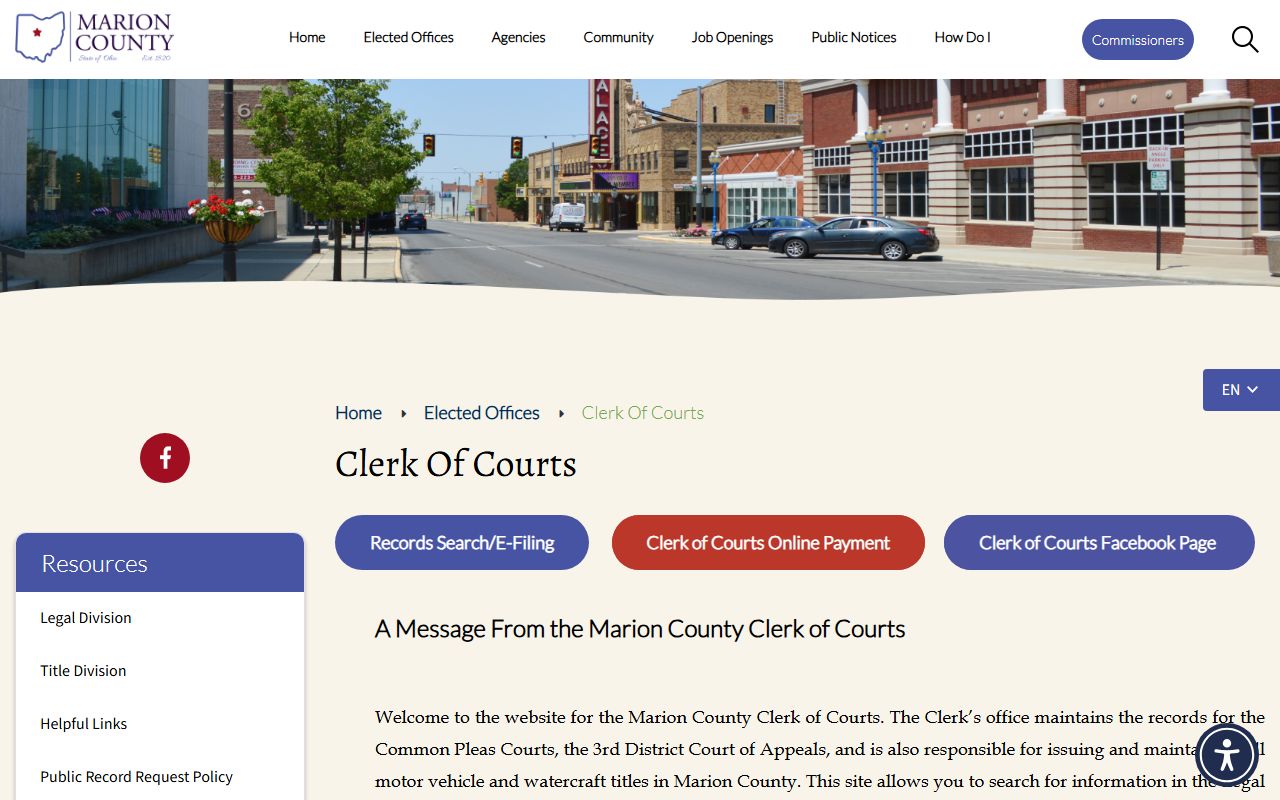
The clerk page should be used when a verified Common Pleas record or official copy is needed.
Public Record Search
Sponsored Results